
This page presents selected research prototypes from a six-month digital arts R&D project exploring inclusive identity representation, across seasonal and cultural contexts within animated reaction media.
THE
REPRESENTATION
GAP.
Animated reaction media has become a primary vehicle for emotional and cultural expression in digital communication. Billions of GIF interactions occur daily across messaging platforms, yet the existing libraries operate within a strikingly narrow cultural lens, one that systematically underserves the expressive range of diverse identities in the UK and globally.
A structural data bias in digital semiotics.
Not a technology failure. A representation failure.
Current digital communication libraries reflect a significant data bias: the visual vocabulary available for culturally specific moments, Eid al-Fitr, Diwali, Lunar New Year, Black History Month, Carnival, is either absent or tokenistic. Communities seeking authentic expressive media encounter what this project terms a digital visibility gap: the structural absence of one's identity from the shared language of digital culture.
This is not simply an inconvenience. When the tools used for everyday communication consistently fail to reflect a person's identity, cultural background, or lived experience, the omission functions as a form of digital exclusion. GIF YOU investigates how that gap can be addressed through rigorous, research-led creative production.
"We are exploring how small-scale digital assets can function as tools for cultural preservation, individual agency, and social cohesion in the UK's diverse communities."
GIF YOU, Digital Arts R&D Project, 2025-2026
PROJECT AIMS & SCOPE
The project aims to develop an inclusive digital framework mapping identity-based expression across seasonal and cultural contexts.
01. Investigate the scope of the representation gap. Map the specific communities, cultural events, and expressive registers that existing animated media libraries consistently underserve, establishing an evidence base for the scale and nature of digital visibility inequality in the UK context.
02. Develop and validate a production methodology for inclusive animated media. Design and test a four-axis creative framework , skin tone, cultural event, age group, and expressive register , capable of generating a systematically diverse library at scale without compromising artistic quality.
03. Produce a body of work that demonstrates digital equity through craft. Develop and test a scalable production methodology capable of generating a systematically diverse animated library, producing prototype case studies as research outputs and functional cultural assets that contribute to discussions around inclusive representation standards in the creative economy.
Research Position
"Digital equity in expressive media is not achieved through token inclusion. It requires a systematic, culturally informed methodology applied at every stage of production."
METHODOLOGICAL
FRAMEWORK.
The Identity Matrix: a four-axis expressive framework ensuring representation is structural, not incidental.
The four dimensions of the matrix do not operate independently , they interact. A Dark Brown elder woman celebrating Eid al-Fitr is a fundamentally different creative and cultural problem from a Fair-toned teenager doing the same. Each intersection is treated as its own discrete research and production question.
Skin Tone & Physiognomy
Six tones mapped across a fair-to-deep spectrum, moving beyond the "yellow emoji" default to nuanced human diversity. Each tone is treated as a distinct visual language, not a filter applied after the fact.
Cultural Semiotics
36 events from the UK cultural calendar, each studied for its specific visual vocabulary, ritual markers, and community variation. The goal is ethnographic accuracy , capturing what an event means to the people who live it, not a generalised depiction for outside observers.
Generational Representation
Three age cohorts , youth, adult, elder , ensuring that age diversity is not sidelined by digital trends. Existing libraries default overwhelmingly to young-adult figures; this project treats generational breadth as a core representational requirement.
Linguistic & Register Sensitivity
Sincere and comedic registers across all identity groups, mapping how different communities express humour, gesture, and emotion. Expressive range is as much a dimension of representation as visual identity.
INVESTIGATIVE
OUTCOMES.
A digital visibility gap.
A matter of digital equity.
And social cohesion.
-
01
A documented prototype set of case studies demonstrating how the four-axis Identity Matrix functions in practice, across a range of skin tones, cultural events, age cohorts, and expressive registers.
-
02
A tested and refined production methodology for inclusive animated media, evaluated through iterative prototype development and refined against representation criteria at each stage.
-
03
Empirical evidence that artistic quality and systematic inclusion are not in tension , and that the creative decisions required for authentic representation produce stronger, more precise work.
-
04
Early-stage findings contributing to discussions around inclusive digital asset production, including observations on metadata practices, alt-text approaches that describe skin tone and cultural context, and representation criteria for animated media.
-
05
Six visual case studies demonstrating the range of identity, event, and expressive register produced by the framework , selected as representative R&D outputs from the full library.
Social Impact &
Digital Equity
This research addresses a documented market failure in digital cultural representation. The social value of the work operates across three interconnected registers.
For the Individual
Enhancing personal agency and self-advocacy through authentic visual representation in everyday digital communication. When individuals can find themselves in the shared language of digital culture, participation becomes genuinely open rather than nominally so.
For the Community
Strengthening social cohesion by validating diverse cultural narratives within the dominant infrastructure of digital expression. The presence of culturally specific animated media serves as a form of digital heritage preservation for communities whose traditions are routinely absent from mainstream platforms.
For the Creative Economy
Setting new benchmarks for inclusive digital asset standards, metadata practices, and representation criteria. The methodological framework developed here is transferable , a replicable model for studios, platforms, and commissioners working across the UK creative industries.
R&D Outputs
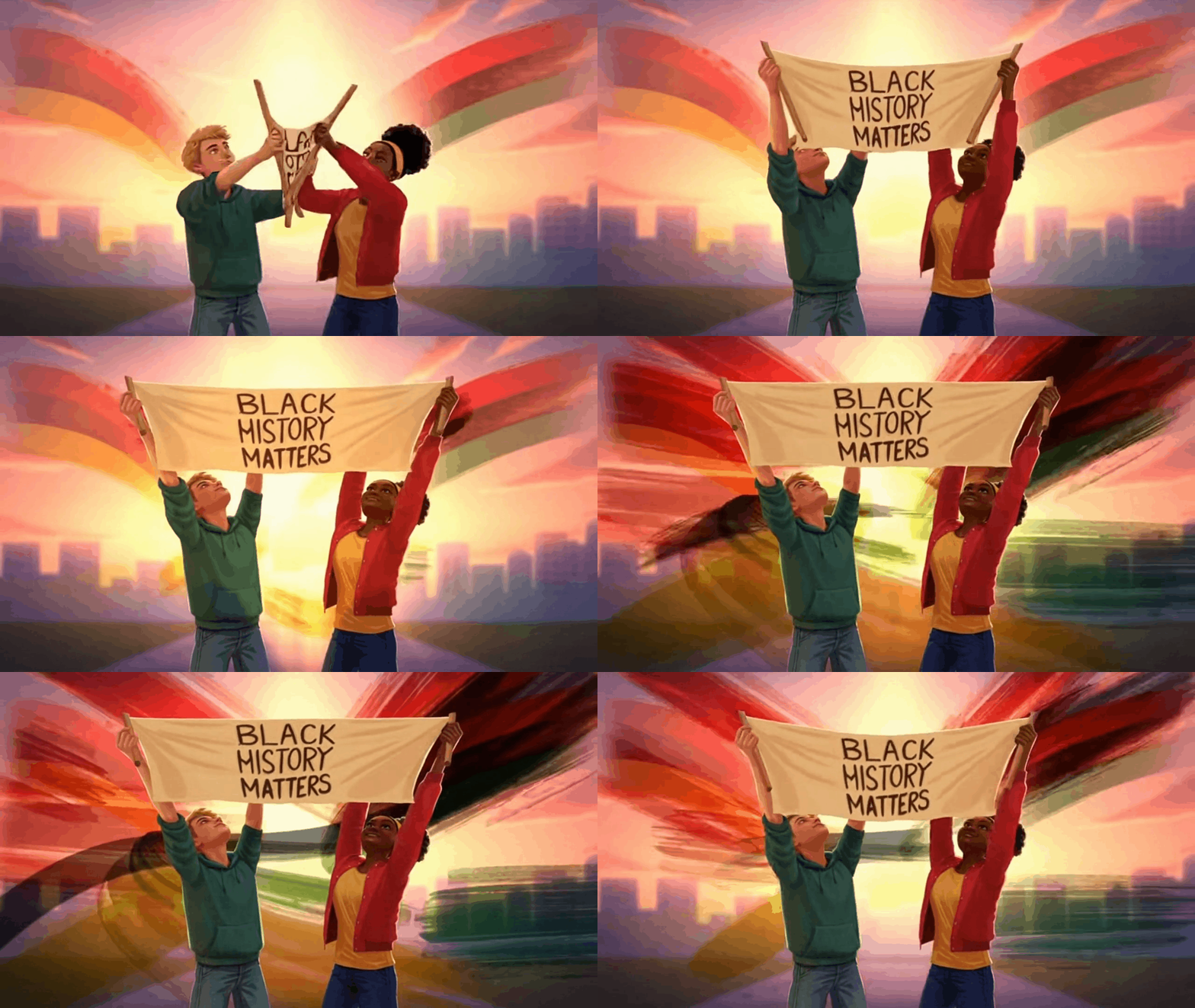
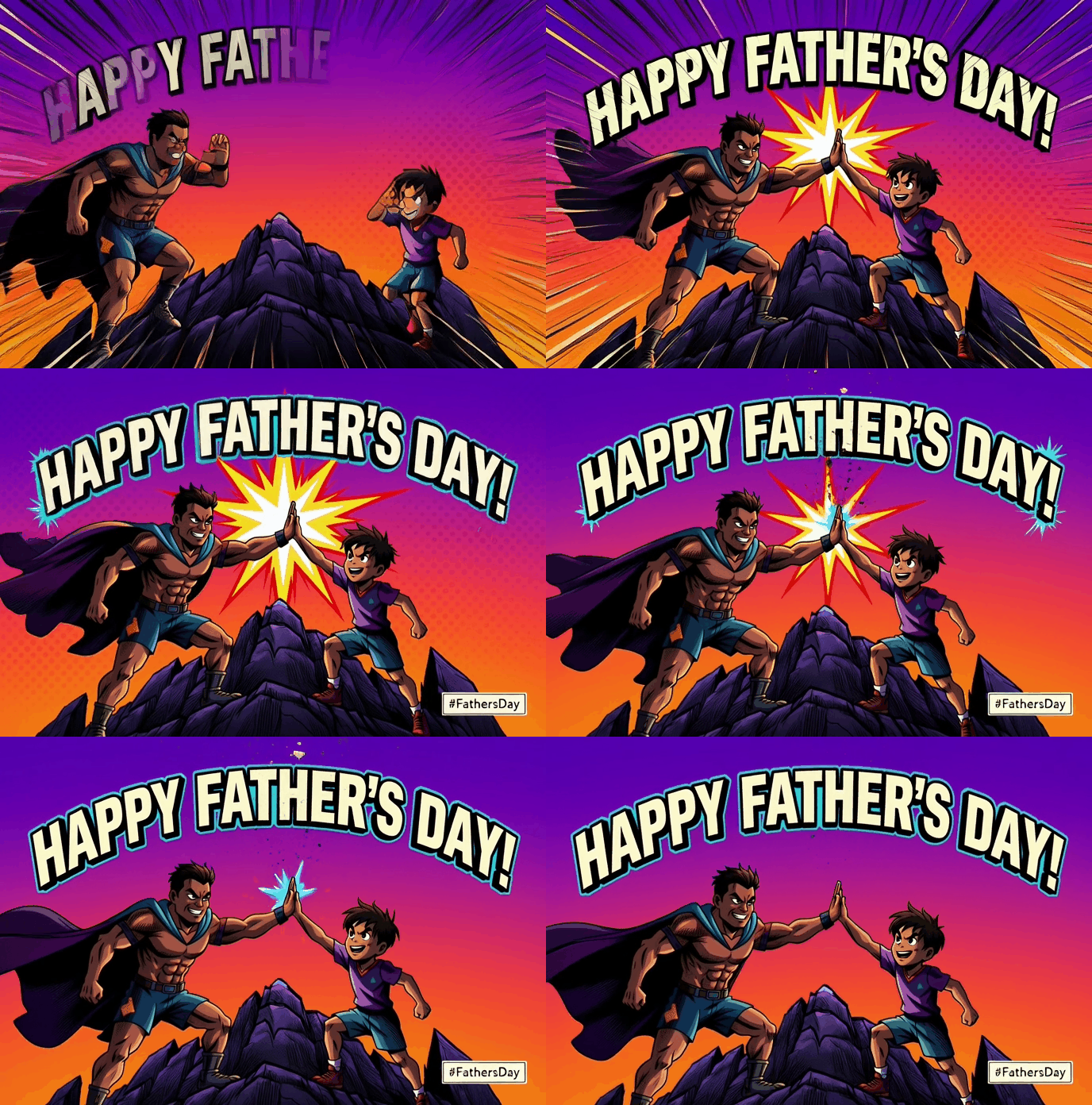
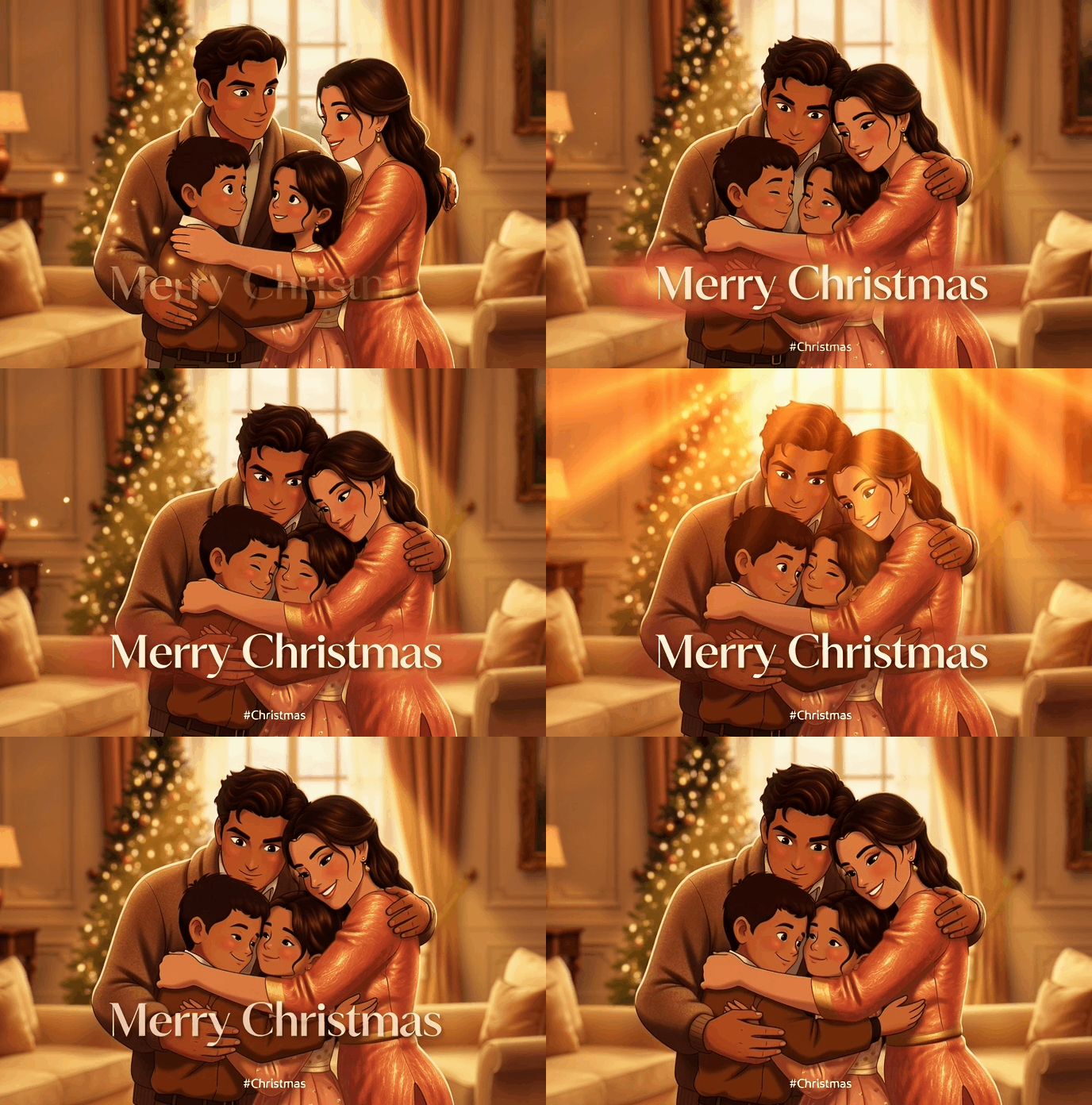
Six works selected from the prototype library, each representing one position on the six-tone spectrum. Selection criteria: diversity of animation style, cultural event, age cohort, and expressive register. Click any work to review its research notes.



PRINCIPLES
OF
PRACTICE.
Our creative process prioritises community-led insight. We do not create for communities from a distance , we develop assets that reflect the lived experiences and visual languages of the people they represent, upholding an ethical approach to cultural digital heritage.
Tokenistic depiction. No cultural or identity group is reduced to a single visual shorthand or borrowed aesthetic , what researchers term "semiotic flattening." If it cannot be done with ethnographic honesty, it is not done.
Assumption without research. Each of the 36 cultural events was studied for its visual vocabulary, ritual context, and community variation before production began. Community-led insight precedes artistic production.
Single-pass production. Every work was subject to iterative review at each stage of production. When something did not meet the representation criteria, it was revised. Revision is built into the methodology as a requirement, not treated as a sign of failure.
Generalisation over specificity. Where a choice exists between broad legibility and cultural accuracy, accuracy is prioritised. "Generic enough to include everyone" is a design decision that, in practice, includes no one fully.
Iterative production methodology. Each work passed through multiple review stages before completion, with representation criteria assessed at every step. The capacity to revise is not a contingency, it is a design requirement.
Cultural specificity at every axis. Each intersection of skin tone, event, age group, and expressive register is treated as a discrete creative and research problem. Specificity is the methodology, not a constraint on it.
"We are investigating how small-scale digital assets can drive large-scale shifts in cultural visibility, individual agency, and digital equity."
As a collective of artists and technologists, we are exploring the intersection of identity and digital semiotics. Our work at GIF YOU is an ongoing inquiry into how the UK's diverse communities can find authentic representation in the everyday tools of digital communication.
Inclusive Identity Representation in Animated Reaction Media , London, UK , 2025-2026